
Area Codes Serving North Carolina
Ten codes are active across North Carolina. Six of them anchor a region and four of them are overlays sitting on top of a region that already had one. The original is 704, assigned in 1947 when the first North American numbering plan was drawn up. At that point it covered all of North Carolina by itself.
Everything after that came from growth. 919 was carved out in 1954, then 910 in 1993, 336 in 1997, and both 828 and 252 in 1998. Once splitting became too disruptive, the industry started adding overlays instead. That produced 980 for the Charlotte region, 984 for the Triangle, 743 for the Triad, and 472 for the southeast.
| Area Code | Coverage | Year Assigned | Overlay Status |
|---|---|---|---|
| 704 | Charlotte, Concord, Gastonia, Kannapolis, Monroe, Salisbury, Statesville and the surrounding south-central Piedmont | 1947 | Regional code, shares its ground with 980 |
| 980 | Identical to 704 | 2001 | Overlay added for 704 relief |
| 919 | Raleigh, Durham, Chapel Hill, Cary, Apex, Garner, Clayton, Smithfield, Goldsboro, Sanford, Henderson | 1954 | Regional code, shares its ground with 984 |
| 984 | Identical to 919 | 2012 | Overlay added for 919 relief |
| 336 | Greensboro, Winston-Salem, High Point, Burlington, Asheboro, Reidsville, Mount Airy, Wilkesboro | 1997 | Regional code, shares its ground with 743 |
| 743 | Identical to 336 | 2016 | Overlay added for 336 relief |
| 910 | Fayetteville, Wilmington, Jacksonville, Lumberton, Pinehurst and Southern Pines, the Fort Liberty area | 1993 | Regional code, shares its ground with 472 |
| 472 | Identical to 910 | 2022 | Overlay added for 910 relief |
| 828 | Asheville, Boone, Hendersonville, Hickory, Morganton, Lenoir, Waynesville, Brevard, Cullowhee | 1998 | Still a single code, relief filed in 2025 |
| 252 | Greenville, Rocky Mount, Wilson, Elizabeth City, New Bern, Kinston, Morehead City, the Outer Banks | 1998 | Still a single code |
Two of those rows deserve a second look. 828 and 252 are the only regions where one code still carries the whole load, and both are the closest to running out.
North Carolina Area Code Coverage by Region
The cleanest way to picture the map is by region rather than by county. North Carolina splits into six numbering regions, and four of them use a pair of codes. Within a pair, the two codes cover exactly the same towns. A neighbor across the street can have a 980 number while you have a 704 number, and both are local to each other.
- Charlotte and the southern Piedmont - 704 and 980, reaching Mecklenburg, Cabarrus, Gaston, Union, Iredell, and Rowan area communities
- The Research Triangle and central Piedmont - 919 and 984, reaching Wake, Durham, Orange, Johnston, Wayne, Lee, and Vance area communities
- The Triad and northwest - 336 and 743, reaching Greensboro, Winston-Salem, High Point, and the north-central Piedmont
- The southeast, sandhills, and coast - 910 and 472, reaching Cumberland, New Hanover, Onslow, Robeson, Moore, Scotland, and Hoke area communities
- The mountains and the west - 828 on its own, from Hickory and Morganton out to the far western counties
- The northeast and the coastal plain - 252 on its own, from Rocky Mount and Greenville out to the Outer Banks
Those boundaries do not line up neatly with county lines or ZIP codes, and they never did. Numbering regions were drawn around telephone switching, not around government maps. The national administrator publishes the official picture.
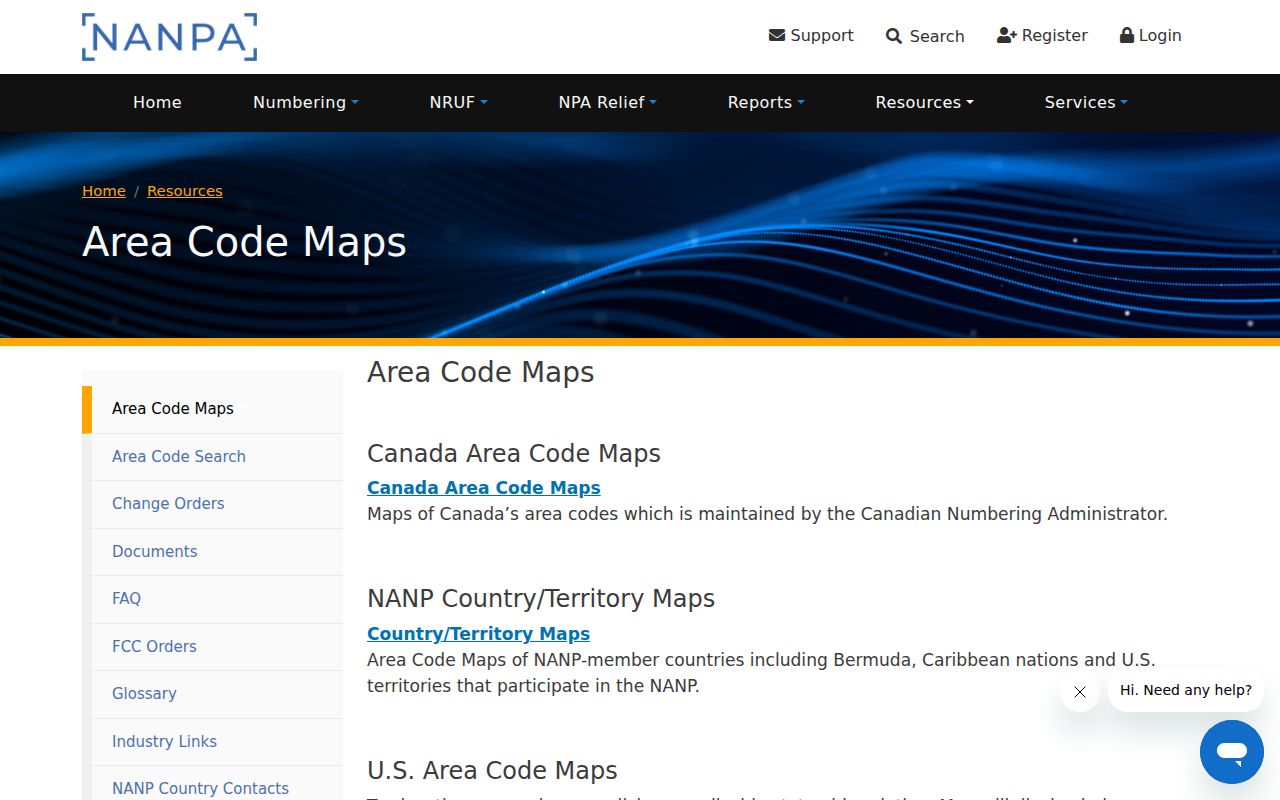
Pick the state abbreviation on the NANPA area code maps page and it returns the current map for North Carolina, which is the version to trust over any older printed map.
Overlay and Split Explained
These two words come up constantly in North Carolina area code history, and they describe very different experiences for the people living through them. A split redraws the map. An overlay leaves the map alone and adds a code on top. North Carolina used splits through the 1990s and has used overlays ever since.
- Split
- The region gets cut in two. Half the towns keep the old code and half are moved to a brand new one. Anyone on the losing side has to change their number, reprint their stationery, and tell everyone.
- Overlay
- Nothing on the map moves. A second code is switched on for the same towns and gets used for new lines only. Existing customers keep what they have, and the trade is that every local call now needs the area code.
- Permissive dialing
- A grace window during a changeover. Both the old and the new dialing patterns work, so calls keep connecting while people adjust. It ends on a set date.
- Relief
- The industry word for fixing a region that is running low on numbers. Relief can arrive as a split or as an overlay, and the state regulator signs off on which.
Every code added in North Carolina since 2001 has been an overlay. That is the reason nobody in Charlotte, Raleigh, Greensboro, or Wilmington has been forced to change a number in more than twenty years.
Dialing Rule for North Carolina
Ten digits, everywhere, on every local call. That is the whole rule now. The overlay regions got there first because two codes sharing one town makes seven digit dialing impossible. The Triad went to mandatory ten digit local dialing on April 23, 2016, a month before 743 numbers started being handed out. The other overlay regions did the same thing on their own timelines.
Important: Seven digit local calls no longer connect anywhere in North Carolina. Store every number with its area code, including numbers inside your own town.
The last holdouts changed for a reason worth knowing. When 988 became the national number for the Suicide and Crisis Lifeline, any region still allowing seven digit dialing had a conflict, because local numbers beginning with 988 would have blocked the short code. The federal deadline to end seven digit dialing in those areas was October 24, 2021. The notice that went out with the 472 overlay told customers plainly to save every local number in ten digit form.
Long distance is a separate question. Some carriers still want a 1 in front of the ten digits for toll calls, while mobile phones generally do not care. The North Carolina phone codes page covers that side of dialing, along with the short codes and star codes.
History of North Carolina Area Codes
The story runs in three phases. One code for all of North Carolina, then a wave of splits, then a switch to overlays. Each phase was driven by the same thing, which is demand for numbers outrunning supply. Fax machines, pagers, second household lines, and finally mobile phones each took a bite.
| Year | Event |
|---|---|
| 1947 | 704 assigned as the original code for North Carolina |
| 1954 | 919 split off from 704 for the east and center |
| 1993 | 910 split off from 919 for the southeast and parts of the northwest |
| 1997 | 336 split off from 910 for the Triad and northwestern Piedmont |
| 1998 | 828 split off from 704 for the mountain counties |
| 1998 | 252 split off from 919 for the northeast and coastal plain |
| 2001 | 980 introduced as an overlay for 704 |
| 2012 | 984 introduced as an overlay for 919 |
| 2016 | 743 introduced as an overlay for 336 |
| 2021 | Ten digit local dialing completed statewide alongside the 988 rollout |
| 2022 | 472 introduced as an overlay for 910 |
The 472 rollout is the best documented of the set. The Utilities Commission approved relief for the 910 region by order dated June 25, 2021, after being told the code would run out of numbers in late 2022. New 472 assignments began October 7, 2022. The announcement named Fayetteville, Jacksonville, Lumberton, Wilmington, and the Fort Bragg area, so the change landed on a lot of military families and coastal businesses at once.
Note: Older signs and letterheads across the state still show seven digit numbers, and those numbers usually still work once you add the region's area code.
What a North Carolina Area Code Tells You
Area codes work as regional shorthand here. Say 704 and people think Charlotte. Say 919 and people think the Triangle. 336 reads as the Triad, 828 as the mountains, 252 as the coastal plain, and 910 as Fayetteville, Wilmington, and the military communities around them. The overlay codes carry the same meaning as their partner, though 980, 984, 743, and 472 numbers tend to belong to newer lines.
Some institutions have their own recognizable blocks. Raleigh city government numbers cluster on the 919-996 prefix. NC State campus lines usually start with 919-515. UNC-Chapel Hill and the UNC System commonly use 919-962, 919-843, and 919-445. UNC Charlotte runs on 704-687, and its staff directory even prints that prefix beside its reverse lookup box. The state education department uses 984-236.
Do not push the shorthand too far, though. Number portability means a person keeps their number when they change carriers or move house. A 919 number can ring in Asheville, or in another state entirely. The code tells you where the number started, not where the phone is now.
Local Exchange Prefixes in North Carolina
Under each area code sits another layer of three digits, the exchange prefix. In a number written as area code, prefix, then four digits, the prefix is the middle block. It once pointed at a specific switching building and the billing area around it. Modern number pooling and portability have loosened that link, so today it is a clue rather than a fact.
Anyone who wants the real assignment data can get it free from the national administrator.
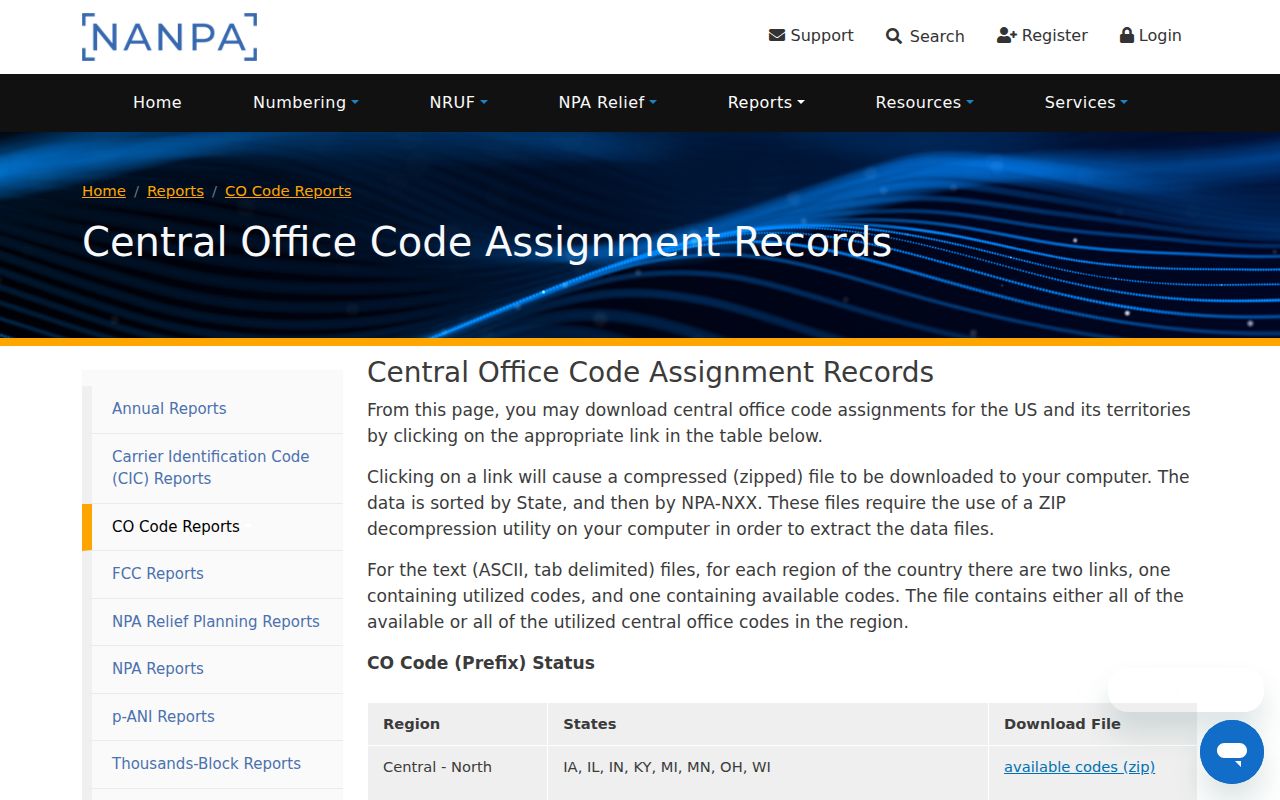
The central office code assignment records download as zipped files sorted by state and then by area code and prefix, which is the closest thing to professional routing data that the public can get without paying for it.
Rate centers give the prefixes their geography. In the Charlotte region those include Charlotte, Concord, Gastonia, Monroe, Salisbury, Statesville, and Kannapolis. Around the Triangle you get Raleigh, Durham, Chapel Hill, Cary, Apex, Garner, Clayton, Goldsboro, and Sanford. The Triad has Greensboro, Winston-Salem, High Point, Burlington, Asheboro, and Reidsville. The southeast has Fayetteville, Wilmington, Jacksonville, Lumberton, and the Pinehurst area. The mountains work through Asheville, Boone, Hendersonville, Hickory, Morganton, Lenoir, and Waynesville, while the east runs on Greenville, Rocky Mount, Wilson, Elizabeth City, New Bern, Kinston, and Morehead City.
Future Area Codes Planned for North Carolina
One region is actively in line for a new code. The Utilities Commission reported that a numbering relief project for 828 was filed on November 24, 2025, and the recommended fix is an all services overlay. The new code itself was not named in the notice that was reviewed, so the digits are still open. Mountain residents would keep their 828 numbers either way, and the practical change would be a second code appearing on new lines.
The forecasts behind that decision come from an October 2025 analysis, and they show how differently the regions are aging.
| Region | Codes | Projected Exhaust |
|---|---|---|
| Mountains and west | 828 | Third quarter 2028 |
| Northeast and coastal plain | 252 | Second quarter 2030 |
| Charlotte region | 704 and 980 | First quarter 2036 |
| Research Triangle | 919 and 984 | Fourth quarter 2045 |
| Southeast and coast | 910 and 472 | Fourth quarter 2048 |
| Triad | 336 and 743 | Fourth quarter 2065 |
Those dates are projections, not appointments, and they shift as demand changes. The process itself is steady. The national administrator watches supply, runs industry planning meetings, and files a relief petition with the state regulator when a region gets close. The relief planning process is published in detail.
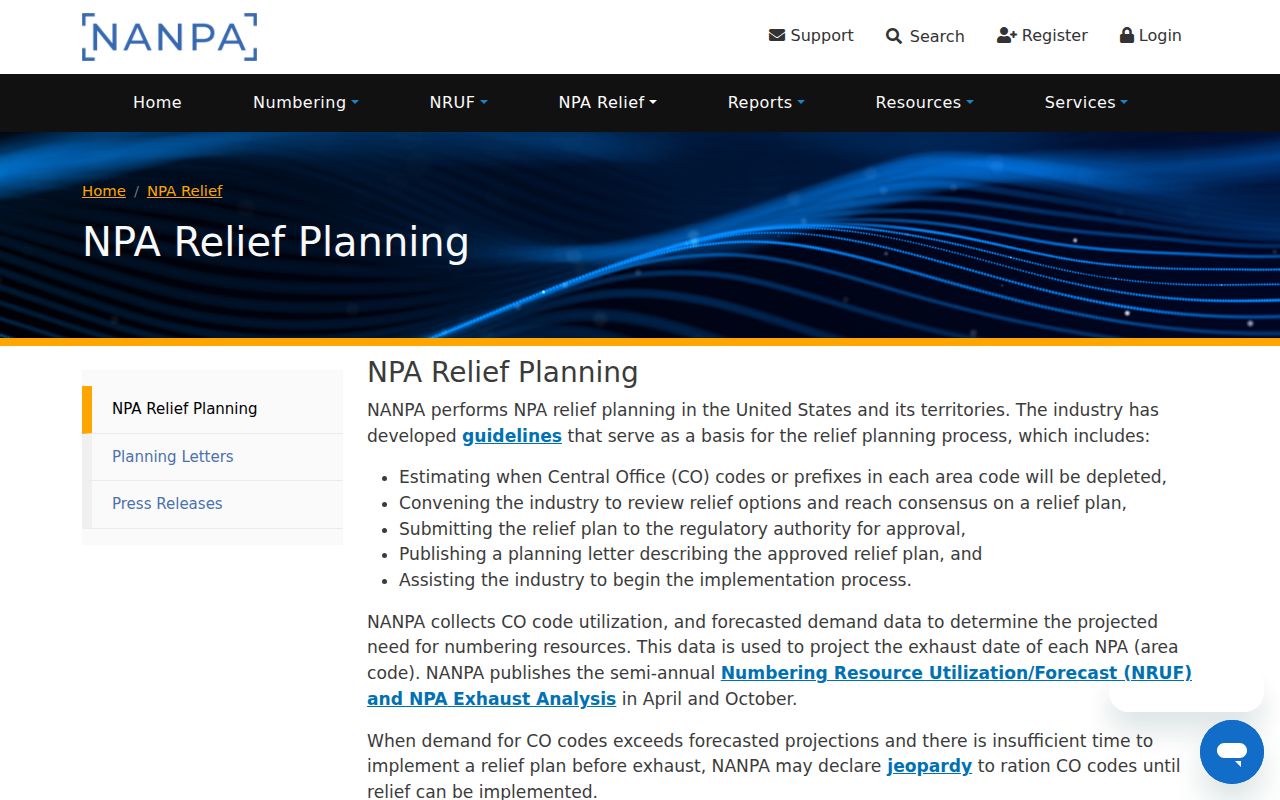
The commission then holds the decision on whether relief arrives as an overlay or a split, and North Carolina has picked the overlay every time since 2001.
Verifying a North Carolina Area Code
Scam calls lean on fake or unfamiliar codes, so it is worth knowing how to check one in thirty seconds. Two federal sources settle it. The numbering administrator runs a public search that returns whether a code exists and which state and region it belongs to. The communications regulator publishes the underlying numbering data. Neither one will tell you who called, and no official source will. If someone says they are calling from a North Carolina office, confirm the office's published number instead of trusting the caller ID.
Once you know the code is real and where it belongs, the next step is finding out what sits behind the number. That walkthrough lives on the North Carolina phone numbers page.